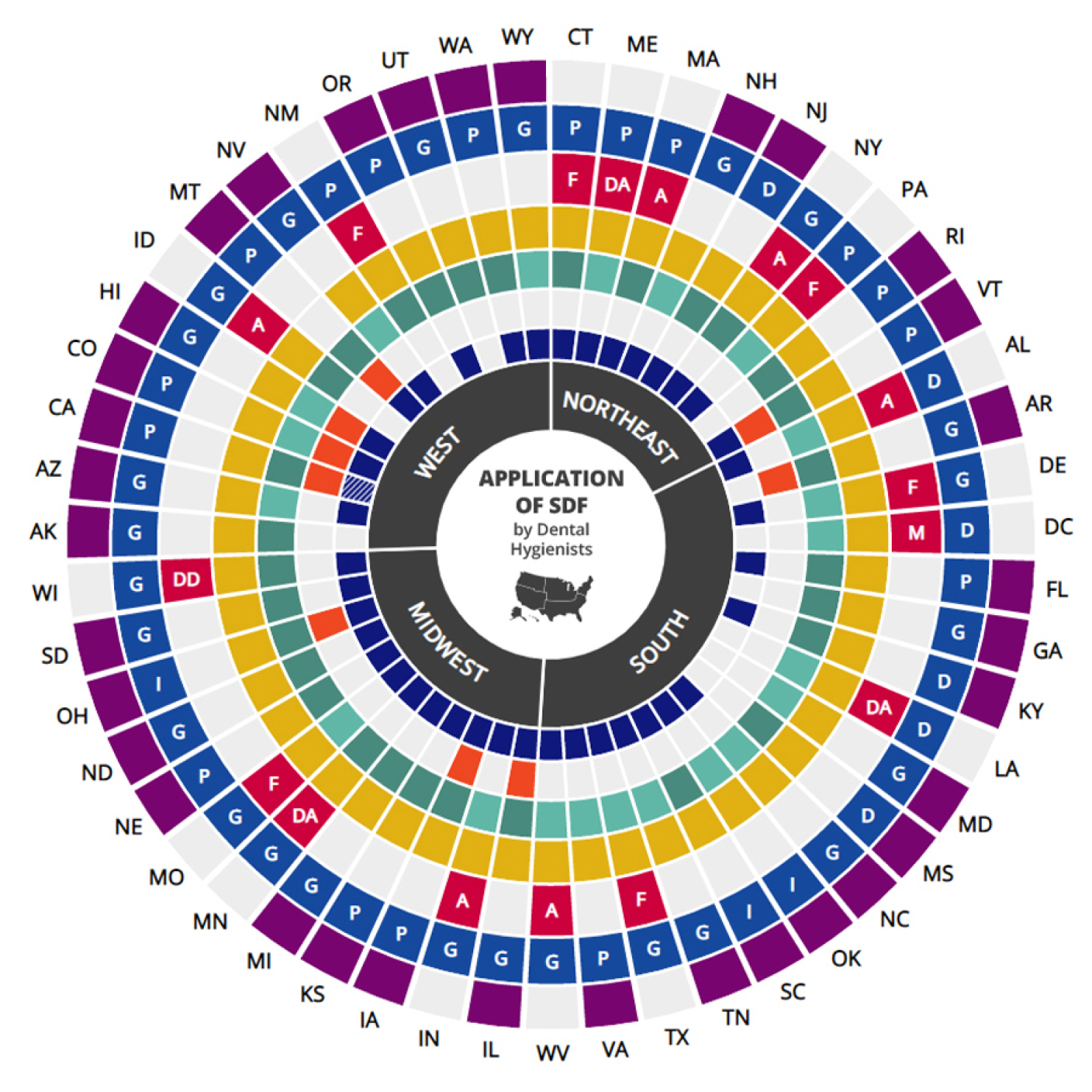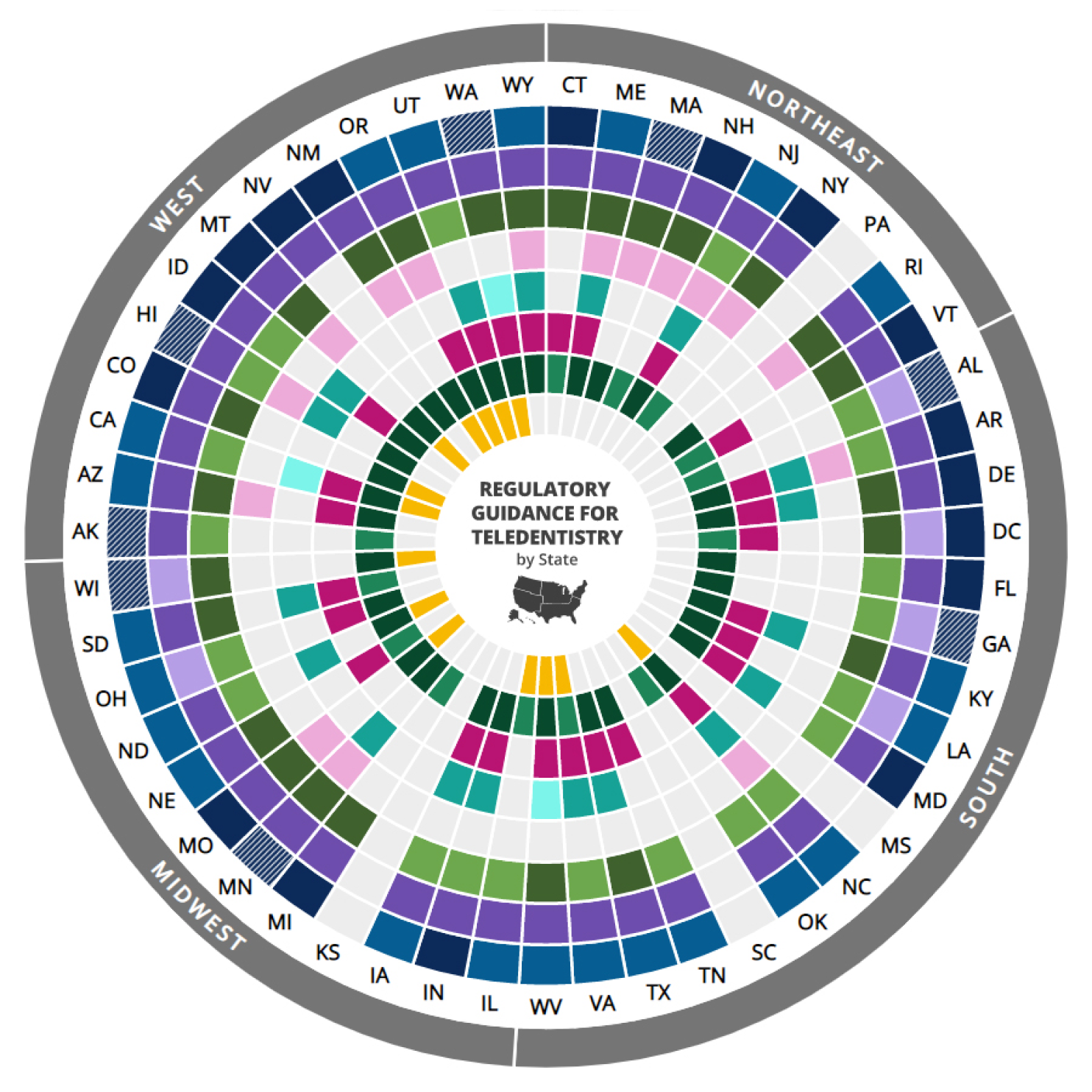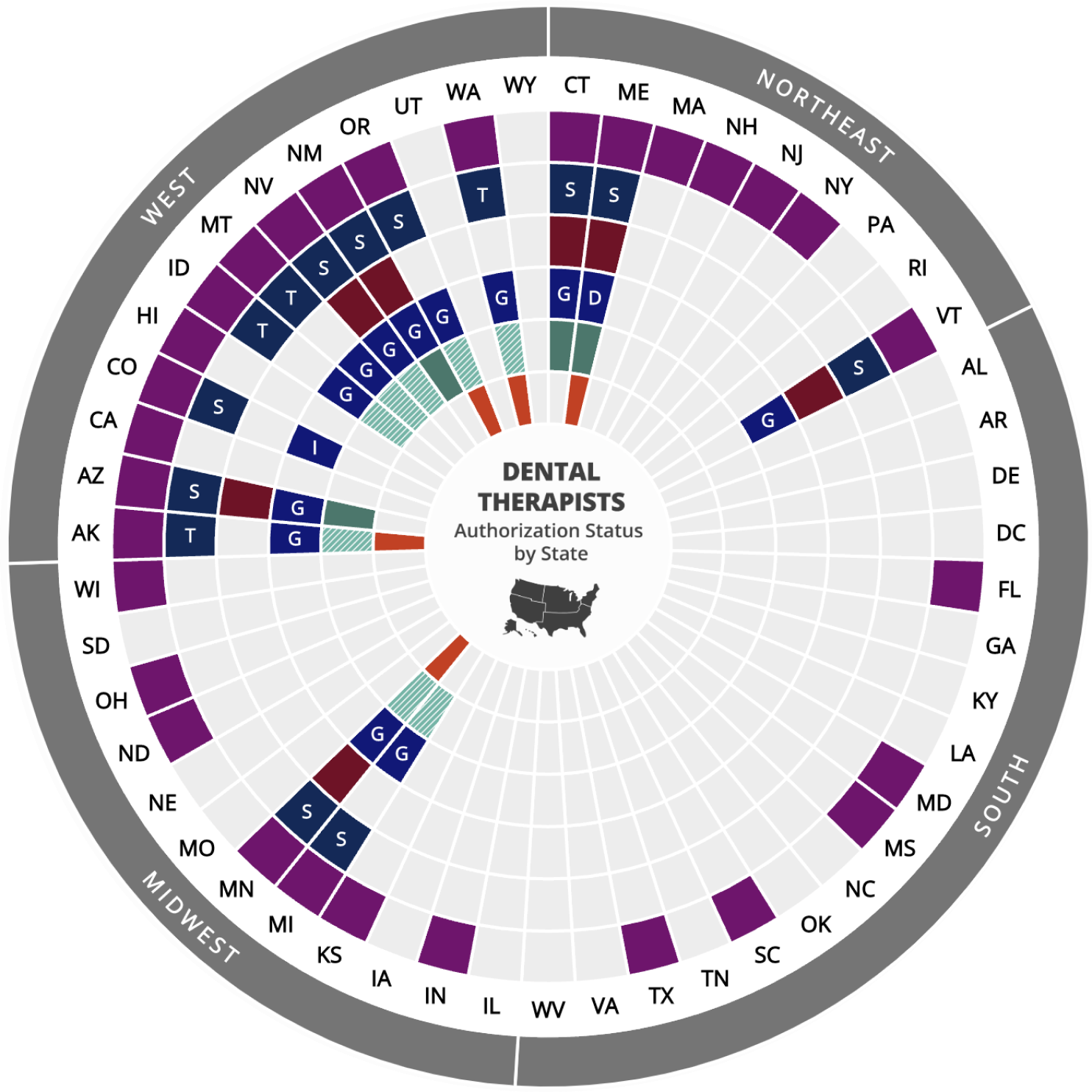
Variation in Dental Hygiene Scope of Practice by State
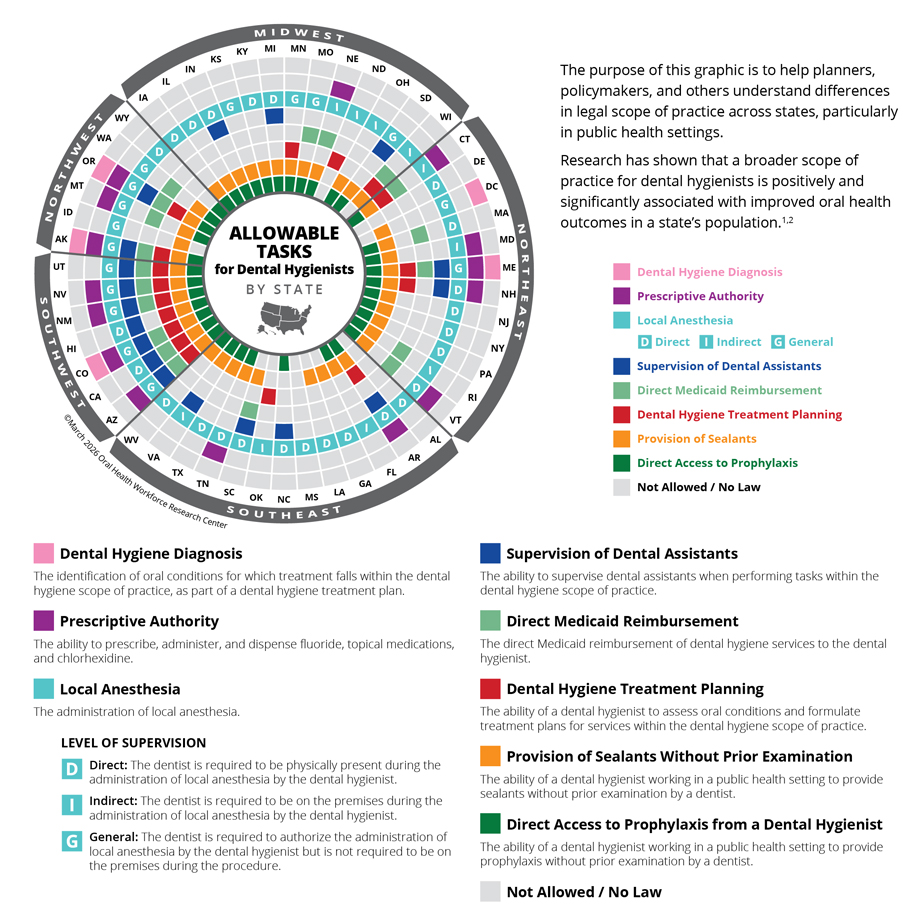
This infographic, created in 2017 with updates in 2019, 2024 and 2026, illustrates allowable tasks for dental hygienists by each state in the United States, to help planners and policymakers understand the differences in legal scope of practice across states, particularly in public health settings.
Legal scope of practice for dental hygienists is based on state-specific acts that describe the services that dental hygienists can provide and under what conditions they can be provided. Restrictive legal scopes of practice often serve as a barrier to effective and efficient delivery of health services.

References:
1. Shirey S, Fernando T, Surdu S, Moore J. State-Specific Dental Hygiene Scope of Practice: Updating the Professional Practice Index. Oral Health Workforce Research Center, Center for Health Workforce Studies, University at Albany, College of Integrated Health Sciences; 2026. https://oralhealthworkforce.org/wp-content/uploads/2026/09/OHWRC-DHPPI-Brief-FINAL.pdf
2. Langelier M, Baker B, Continelli T. Development of a New Dental Hygiene Professional Practice Index by State, 2016. Oral Health Workforce Research Center, Center for Health Workforce Studies, University at Albany, School of Public Health; 2016. https://oralhealthworkforce.org/wp-content/uploads/2018/02/OHWRC_Dental_Hygiene_Scope_of_Practice_2016.pdf
3. Langelier M, Continelli T, Moore J, Baker B, Surdu S. Expanded scopes of practice for dental hygienists associated with improved oral health outcomes for adults. Health Affairs. 2016;35(12):2207-2215. doi:10.1377/hlthaff.2016.080
This graphic describes the highest level of practice available to a dental hygienist in a state, including dental hygiene therapy. Some provisions highlighted in this infographic may apply only to dental hygienists in collaborative care agreements and/or dental hygienists practicing in specific settings, including but not limited to public health settings and designated Health Professional Shortage Areas. The authors wish to thank the American Dental Hygienists’ Association for their assistance with updating this infographic.
This infographic is for informational purposes only. For guidance on specific legal or regulatory matters, please contact the appropriate state dental board or a qualified attorney. Due to operational limitations, the most recent regulatory or legislative updates may not be reflected, as the infographic is revised on a 2- to 4-year cycle. If you are aware of newly enacted regulatory or legislative changes, please email us at info@ohwrc.org with supporting documentation. Upon verification, updates will be incorporated to reflect the change/s for the relevant state.
This work is supported by the Health Resources and Services Administration (HRSA) of the US Department of Health and Human Services (HHS) as part of an award totaling $450,000 with 0% financed with non-governmental sources. The information presented in this infographic is based on research conducted by OHWRC and does not necessarily represent the official views of, nor an endorsement by, HRSA, HHS, or the US government. For more information, please visit HRSA.gov.
This infographic is the property of the OHWRC and may not be modified in any way. It may be shared publicly in its current form in its entirety, including the attribution stated above.
Last Updated March 2026.